737 MAX
MAX 7, MAX 8, MAX 9, MAX 10
Two independent sources on every claim.
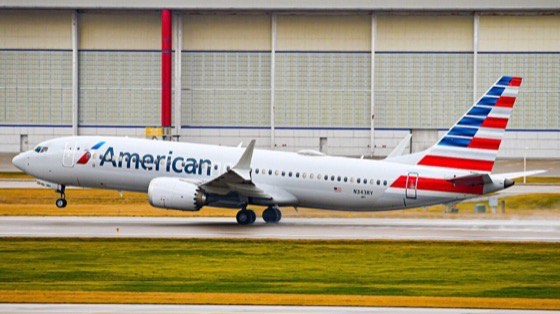
At a glance
- The FAA issued the 737 MAX 10's type certificate on 20 October 2026, the agency confirmed, during a visit to Boeing's Everett plant by Transportation Secretary Sean Duffy. The MAX 7 and MAX 10 are now both certified, completing the MAX family.
- The FAA's Corrective Action Review Board concluded on 2 October 2026 that the flight management computer software defect that had paused MAX 10 certification is not a safety of flight issue, clearing the main obstacle to certifying the variant.
- Boeing still is not stable at 47 aircraft per month. Chief executive Kelly Ortberg said on 16 September that Renton wing production is the bottleneck, and the target of 52 per month has slipped into 2027.
- The FAA proposed an Airworthiness Directive on 21 September 2026 covering 95 US registered MAX 8 and MAX 9 aircraft, after reports that elevator buss assembly bearings were installed without sealant during production.
Type card
| Variants | MAX 7, MAX 8, MAX 8200, MAX 9, MAX 10 |
| Engines | CFM International LEAP-1B |
| Typical seating | 138 to 204 depending on variant |
| Assembly | Renton, Washington, with a second line at Everett |
| Status | In production |
| Certified | MAX 8 in 2017, MAX 9 in 2018, MAX 7 in August 2026, MAX 10 in October 2026 |
Program and production
Ortberg told investors at the Morgan Stanley Laguna conference on 16 September that Boeing is "not stable yet" at 47 single aisle aircraft per month. That matters because the FAA lifted its production cap and cleared Boeing to move to 47 back in May 2026, so the constraint is no longer regulatory. It is industrial, and Ortberg named the specific problem: Boeing's own wing manufacturing operation at Renton, rather than the outside supply chain the company has pointed to for most of the past two years.
Rate 52 by the end of 2026, a target Boeing set for itself, now looks out of reach, and in third quarter results reported 27 October the company confirmed it is now targeting the second half of 2027 for that step. Boeing's own count, published 13 October 2026, put September MAX deliveries at 43 aircraft, with the third quarter closing at 124 and the year to date total at 367, the highest nine month figure since deliveries began in 2017. That is still short of the 47 a month target, a gap Reuters reported Ortberg as calling "not stable yet."
Certification had been the better news. The FAA granted the amended type certificate for the 737-7 on 3 August 2026. A flight management computer software defect, detailed under Technical and maintenance below, held up MAX 10 certification from 28 September until the FAA cleared it on 2 October, reopening the path to certification. The FAA then issued the MAX 10's own amended type certificate on 20 October, as detailed above. First deliveries of both the MAX 7 and MAX 10 are still targeted for 2027, since production and delivery readiness, not the paperwork, now set the pace.
The FAA's certificate does not cover European operators. EASA has not yet validated the MAX 10, and its executive director said before the FAA decision that the agency was making "very good progress" on closing out the last actions. Aviation Week reported after the FAA certified the aircraft that EASA views the US decision as the trigger for its own final validation steps, which the agency expects will take a few more months.
On the line
A customer flying the MAX 10 under an EASA operating certificate, rather than an FAA one, should not assume the US certification date applies to them. Check with your national authority before planning around an October delivery slot for a European registered aircraft.
Technical and maintenance
The flight management computer software defect that briefly held up MAX 10 certification is now closed out. Boeing disclosed it on 26 September 2026: under a specific go around scenario with the autopilot engaged, the flight guidance system can drop out of vertical navigation, its automated climb and descent mode, into a simpler mode that hands the crew more manual workload at a busy moment. GE Aerospace supplies the affected software, versions 14 and 14.1. The FAA's Corrective Action Review Board, convened once Administrator Bryan Bedford paused MAX 10 certification on 28 September, concluded on 2 October that there is no safety of flight risk, since pilots retain full control and cockpit indications stay clear, according to CNBC and Bloomberg.
On the line
No Airworthiness Directive followed and none is expected. The software remains in service fleet wide pending Boeing's permanent fix, originally due in 2028 and now being brought forward, so keep reinforcing go around procedure familiarity in the meantime.
A separate item is the bear strap Airworthiness Directive, adopted 6 August 2026 and effective 10 September, covering cracking risk in the fuselage reinforcement around the forward galley door cutout on 737-8, 737-9 and 737-8200 models. It reaches 471 US registered aircraft and about 1,429 worldwide, with a related repetitive inspection directive effective 22 October.
On the line
Aircraft that already carry a repair in that area need their records pulled, since a prior repair changes what the inspection asks for. Build the repetitive interval into the check package now.
A further, unrelated item followed on 21 September 2026: a proposed Airworthiness Directive for the 737-8, 737-9 and 737-8200 covering elevator buss assembly bearings installed without sealant. It is not yet in effect, covers 95 US registered aircraft, and comments remain open until 5 November 2026.
On the line
Check serial numbers built in the affected production window against Boeing's Alert RB now, rather than waiting for the AD to become mandatory.
Orders and operators
Combined orders for the MAX 7 and MAX 10 now exceed 1,700 aircraft, so the certification of both variants unlocks a large part of the backlog. Southwest is the anchor customer for the MAX 7 and United for the MAX 10.
Turkish Airlines finalised an order for up to 150 737 MAX aircraft on 23 September 2026, its largest Boeing single aisle order to date.
Allegiant Air exercised options for six more 737-8 aircraft on 23 October 2026, the first taken up under a 2021 purchase agreement with Boeing. The jets are due in 2028 and carry a combined list price above 720 million dollars. The order lifts Allegiant's firm commitment to 56 aircraft, with 74 options still open.
Delivery volume remains the constraint on fleet planning rather than order intake. Operators waiting on MAX 7 and MAX 10 aircraft have spent several years extending leases on older equipment, and nothing in the current rate picture suggests that pressure eases before 2027. Boeing's total company backlog reached a record 745 billion dollars at the end of the third quarter, including more than 6,300 commercial airplanes, up from 715 billion dollars three months earlier.
Safety
No new accident investigations involving the type opened in this period. The software defect was closed out as a continued airworthiness matter, not a safety of flight finding, per the FAA review above. The bear strap cracking remains a separate continued airworthiness matter.
Sources
- CAPA, Centre for Aviation, "EASA making 'very good progress' on validating 737 MAX 10: Executive director", October 2026. https://centreforaviation.com/news/easa-making-very-good-progress-on-validating-737-max-10-executive-director-1363218
- AeroCorner, citing Aviation Week Network, "FAA Certifies the Boeing 737 MAX 10, the Largest 737 MAX", 21 October 2026. https://aerocorner.com/news/faa-certifies-boeing-737-max-10/
- Boeing, "Boeing Reports Third Quarter Results", 27 October 2026. https://boeing.mediaroom.com/2026-10-27-Boeing-Reports-Third-Quarter-Results
- U.S. Securities and Exchange Commission, Boeing Form 10-Q for the quarter ended 30 September 2026, filed 27 October 2026. https://www.sec.gov/Archives/edgar/data/0000012927/000162828026067508/ba-20260930.htm
- AeroTime, "Allegiant orders six more Boeing 737 MAX jets for 2028 delivery", 23 October 2026. https://www.aerotime.aero/articles/allegiant-six-boeing-737-max-order-2028
- AirDataNews, "Allegiant doubles down on Boeing 737 MAX with six more aircraft", 23 October 2026. https://www.airdatanews.com/allegiant-doubles-down-on-boeing-737-max-with-six-more-aircraft/
- Federal Aviation Administration, "Federal Aviation Administration Issues Certification for Boeing 737 MAX 10", 20 October 2026. https://www.faa.gov/newsroom/federal-aviation-administration-issues-certification-boeing-737-max-10
- Boeing, carried by PR Newswire, "U.S. FAA Certifies Boeing 737-10, Largest Member of 737 MAX Family", 20 October 2026. https://www.prnewswire.com/news-releases/us-faa-certifies-boeing-737-10-largest-member-of-737-max-family-302914559.html
- Aviation Week Network, "Boeing 737 MAX 10 Receives FAA Certification", 20 October 2026. https://aviationweek.com/air-transport/safety-ops-regulation/boeing-737-max-10-receives-faa-certification
- Reuters, carried by US News and World Report, "US Set to Announce Certification of Boeing 737 MAX 10 Tuesday, Sources Say", 19 October 2026. https://money.usnews.com/investing/news/articles/2026-10-19/us-set-to-announce-certification-of-boeing-737-max-10-tuesday-sources-say
- Leeham News and Analysis, "Boeing Hoping to Secure 737 Max 10 Certification Ahead of Earnings", 19 October 2026. https://leehamnews.com/2026/10/19/boeing-hoping-to-secure-737-max-10-certification-ahead-of-earnings/
- Boeing, "Boeing Announces Third Quarter Deliveries", 13 October 2026. https://boeing.mediaroom.com/2026-10-13-Boeing-Announces-Third-Quarter-Deliveries
- Capital.com (Reuters), "Boeing deliveries tick up to 57 jets in September", 13 October 2026. https://capital.com/en-gb/news/boeing-deliveries-tick-up-to-57-jets-in-september
- CNBC, "FAA says Boeing 737 Max 10 software glitch not a flight safety issue", 2 October 2026. https://www.cnbc.com/2026/10/02/faa-says-boeing-737-max-10-software-glitch-not-a-flight-safety-issue.html
- Bloomberg, "Boeing 737 Max Software Glitch Found Not to Be Safety Concern by FAA Panel", 2 October 2026. https://www.bloomberg.com/news/articles/2026-10-02/boeing-737-max-software-glitch-determined-not-to-be-safety-issue
- Bloomberg, "Boeing Finds 737 Max Software Glitch That Could Delay New Jet Models", 26 September 2026. https://www.bloomberg.com/news/articles/2026-09-26/boeing-identifies-737-max-software-glitch-that-may-prompt-delays
- CNBC, "Boeing flags 737 Max navigation software glitch", 26 September 2026. https://www.cnbc.com/2026/09/26/boeing-737-max-navigation-software-glitch.html
- NBC News, "Boeing identifies 737 MAX software glitch affecting landing navigation feature", 26 September 2026. https://www.nbcnews.com/news/us-news/boeing-identifies-737-max-software-glitch-affecting-landing-navigation-rcna599993
- Aviation Week Network, "Boeing Tackles 737 MAX Software Glitch With -10 Certification Looming", 27 September 2026. https://aviationweek.com/air-transport/boeing-tackles-737-max-software-glitch-10-certification-looming
- CNBC, "Boeing 737 Max 10 certification delayed by software issue, FAA says", 28 September 2026. https://www.cnbc.com/2026/09/28/faa-boeing-737-max-10-certification-delay-software-issue.html
- Bloomberg, "FAA Delays Boeing 737 Max 10 Certification Over Software Issue", 28 September 2026. https://www.bloomberg.com/news/articles/2026-09-28/faa-to-delay-approval-for-boeing-737-max-10-amid-software-issue
- AeroTime, "FAA delays Boeing 737 MAX 10 certification over software", 28 September 2026. https://www.aerotime.aero/articles/faa-delays-boeing-737-max-10-certification-software
- Leeham News and Analysis, "Rate of 47 Max Jets Per Month Still Eludes Boeing", 16 September 2026. https://leehamnews.com/2026/09/16/rate-of-47-max-jets-per-month-still-eludes-boeing/
- US News and World Report, "Boeing CEO Says Increasing 737 MAX Output Is Taking Longer Than Expected", 16 September 2026. https://money.usnews.com/investing/news/articles/2026-09-16/boeing-ceo-says-it-is-taking-longer-to-stabilize-737-max-output-shares-slide
- CNBC, "Boeing CEO says company met requirements to increase 737 Max production to 47 jets per month", 27 May 2026. https://www.cnbc.com/2026/05/27/boeing-ortberg-737-max-production.html
- Federal Register, "Airworthiness Directives; The Boeing Company Airplanes", AD docket FAA-2026-2726, published 6 August 2026. https://www.federalregister.gov/documents/2026/08/06/2026-15936/airworthiness-directives-the-boeing-company-airplanes
- AeroTime, "New FAA directive requires checks on 471 Boeing 737 MAX jets", August 2026. https://www.aerotime.aero/articles/new-faa-airworthiness-directive-requires-checks-boeing-737-max-aircraft
- FAA Newsroom, "FAA Statement on Certification of the Boeing 737 MAX-7", August 2026. https://www.faa.gov/newsroom/faa-statement-certification-boeing-737-max-7
- Boeing, "737-10 completes final certification flight", July 2026. https://www.boeing.com/features/2026/07/737-10-completes-final-certification-flight
- Aerospace America, "Boeing completes 737-7 and 737-10 flight testing", 2026. https://aerospaceamerica.aiaa.org/boeing-completes-737-7-and-737-10-flight-testing-anticipates-faa-certification-very-soon/
- Federal Register, "Airworthiness Directives; The Boeing Company Airplanes", docket FAA-2026-8811, published 21 September 2026. https://www.federalregister.gov/documents/2026/09/21/2026-19255/airworthiness-directives-the-boeing-company-airplanes
- FlightGlobal, "FAA targets Boeing 737 Max elevator bearing issue", 22 September 2026. https://www.flightglobal.com/archive/2026/09/faa-targets-boeing-737-max-elevator-bearing-issue/
- Air Data News, "FAA proposes Boeing 737 MAX checks over improperly installed elevator-control bearings", 22 September 2026. https://www.airdatanews.com/faa-proposes-boeing-737-max-checks-over-improperly-installed-elevator-control-bearings/
- Boeing, "Boeing and Turkish Airlines Finalize Order for up to 150 737 MAX Jets", 23 September 2026. https://boeing.mediaroom.com/2026-09-23-Boeing-and-Turkish-Airlines-Finalize-Order-for-up-to-150-737-MAX-Jets
- Bloomberg, "Turkish Airlines Finalizes Purchase of Up to 150 Boeing Max Jets", 23 September 2026. https://www.bloomberg.com/news/articles/2026-09-23/turkish-airlines-finalizes-order-for-up-to-150-boeing-max-jets
- Aviation Week, "Turkish Airlines Orders 150 737 MAX Aircraft, Engine Details Pending", 23 September 2026. https://aviationweek.com/air-transport/airlines-lessors/turkish-airlines-orders-150-737-max-aircraft-engine-details-pending
Recent stories
- Boeing 737 rate 52 slips to 2027 as backlog tops $745 billion (27 October 2026)
- FAA certifies the Boeing 737 MAX 10 (20 October 2026)
- FAA set to announce 737 MAX 10 certification, sources say (20 October 2026)
- Boeing posts its best MAX delivery run since 2017 (13 October 2026)
- FAA clears Boeing 737 MAX software glitch, reopening path to MAX 10 certification (2 October 2026)