Engines · GE Aerospace
CF34
CF34-3B1, CF34-8C5, CF34-8E, CF34-10E
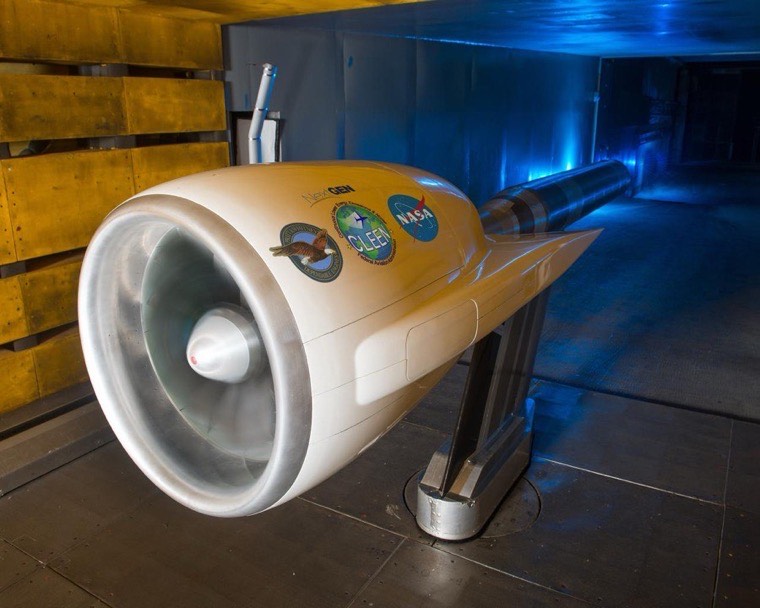
At a glance
- CF34 supply is the binding constraint on Embraer E175 production. Embraer's chief executive has said the delivery target is in jeopardy because GE is delivering late and short.
- The CF34-8E is the sole engine on the E175, which has a backlog of more than 200 aircraft and no alternative supplier.
- SkyWest finalised a CF34-8E order with GE Aerospace covering its 60 aircraft E175 order plus spares.
- The CF34-3B1 and CF34-8C5 support a CRJ fleet of roughly 1,300 aircraft with no production line behind it.
Engine card
| Variants | CF34-3B1, CF34-8C5, CF34-8E, CF34-10E |
| Architecture | Two shaft turbofan, derived from the military TF34 |
| Thrust | 9,220 to 20,000 lbf |
| Applications | CRJ family, Embraer E-Jet E1 family, Challenger business jets |
| Built by | GE Aerospace |
| Status | In production |
Program and production
The CF34 is the engine that quietly decides how many regional jets get built.
Embraer expects to deliver up to 30 E175s in a year, and its chief executive has said that goal is in jeopardy because of CF34 shortages, with GE not delivering what is needed and delivering late. The CF34-8E is the sole engine option on the E175, so there is no second source to absorb the gap and no way for Embraer to build around it.
In plain terms
When an aircraft has only one engine option, an engine shortage stops the line. This is called a sole source dependency, and it recurs across the regional aircraft market because the airframes are too small to justify two engine programmes.
The order book makes the shortage consequential. The E175 backlog exceeds 200 aircraft, and SkyWest alone ordered 60 E175s with purchase rights for 50 more, plus firm delivery positions for 44 additional aircraft covering 2028 to 2032. It finalised a CF34-8E agreement with GE Aerospace including spare engines to cover that fleet.
The E175 stays in production, rather than being replaced by the E175-E2, because it fits inside the US scope clause and the E2 does not. So CF34 demand continues where a normal generational transition would have ended it.
Technical and maintenance
The engine is mature and well understood, with no fleet wide campaign and no durability saga. For an operator in 2026 that predictability is a genuine asset.
On the line
The CF34's advantage over most of the current narrowbody engine market is that nothing unusual is happening to it. There is no inspection campaign, no grounding, no single issue driving unplanned removals. Where it does bite is spares: the same GE capacity problem limiting new engine deliveries also affects spare engine and rotable availability, and rising utilisation on extended life regional fleets is pulling harder on that pool. Plan spare coverage against supply reality rather than against the engine's reliability record.
On the CRJ side the constraint is different again. The CF34-3B1 and CF34-8C5 support roughly 1,300 CRJs with no production line and a type certificate holder, MHI RJ, focused solely on aftermarket support. Parts obsolescence becomes a scheduled activity rather than a surprise.
Applications and fleet
The CF34-8E and CF34-10E power the Embraer E-Jet E1 family. The CF34-3B1 powers the CRJ200 and the CF34-8C5 the CRJ700 and CRJ900.
US passenger airlines still operate around 380 50 seat jets, including about 90 CRJ200s and 80 CRJ550s, and MHI RJ argues the type will remain essential until 2040 because no comparable replacement exists. That view is probably right for the uncomfortable reason that nothing is being built to replace it.
Safety
No significant developments since 11 October 2026.
No Airworthiness Directive of fleet wide significance was issued against the family in this period.
Sources
- Simple Flying, "Embraer E175 Production Plagued By GE CF34 Engine Shortages, CEO Says", 2026. https://simpleflying.com/embraer-e175-production-plagued-ge-cf34-engine-shortages/
- GE Aerospace, "SkyWest, Inc. Orders GE Aerospace Engines to Power New Embraer 175 Aircraft", 2025. https://www.geaerospace.com/news/press-releases/skywest-inc-orders-ge-aerospace-engines-power-new-embraer-175-aircraft
- AviTrader Aviation News, "SkyWest orders new GE CF34 engines for Embraer E175s", 10 July 2025. https://avitrader.com/2025/07/10/skywest-orders-new-ge-cf34-engines-for-embraer-e175s/
- Business Wire, "SkyWest Orders 60 New Embraer E175 Aircraft", 18 June 2025. https://www.businesswire.com/news/home/20250618426153/en/SkyWest-Orders-60-New-Embraer-E175-Aircraft
- FlightGlobal, "MHI RJ says 50-seat jets active until 2040, counters ATR retirement predictions", 2026. https://www.flightglobal.com/airframers/mhi-rj-insists-50-seat-jets-will-remain-active-until-2040/164740.article