Airworthiness directive
FAA orders 787 fuel tank sealant inspections over missing production records
The FAA has ordered inspections of center wing fuel tank sealant on about 60 Boeing 787s after Boeing could not produce records showing the work was checked when the aircraft were built.
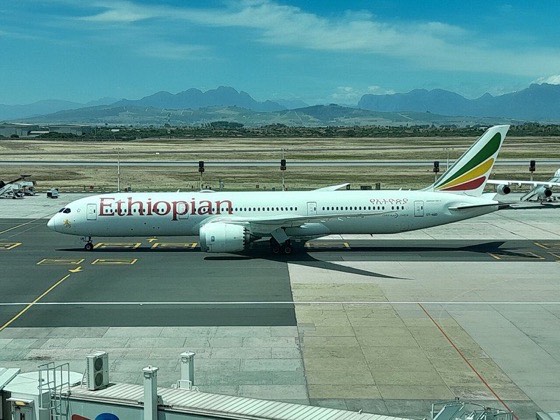
The FAA adopted Airworthiness Directive 2026-22-05 on 2 November 2026, requiring operators of certain Boeing 787-8, -9 and -10 airplanes to inspect sealant in the center wing fuel tank and run adhesion tests where records cannot confirm the required checks were completed during production. The agency said Boeing could not verify those inspections had been carried out on every affected airplane. The rule finalizes a proposal published for comment in February 2026 and takes effect 7 December 2026.
In plain terms
Sealant in a wing fuel tank keeps the structure fuel tight and also helps prevent a spark from reaching the fuel if the tank is struck by lightning. If the sealant was never properly bonded and checked, that protection cannot be assumed to be there.
The FAA's concern is that a defective or poorly bonded sealant installation could create an ignition source inside the tank during a lightning strike. The directive affects an estimated 60 US registered aircraft. The FAA put the cost of the inspection itself at about 34 work hours and 2,890 dollars per airplane, or roughly 173,400 dollars across the US fleet, not counting any repairs that turn up defective sealant. Some of that cost may fall under Boeing's warranty.
The same Federal Register issue carried a related but separate directive, AD 2026-22-04, converting a one time inspection of fuel transfer pump parts in the horizontal stabilizer tank on 747-400 and 747-8 airplanes into a repetitive one, after the FAA found the original check in AD 2023-07-09 insufficient on its own.
On the line
If your fleet operates affected 787s, check whether your aircraft are on Boeing's list for this bulletin before the 7 December 2026 effective date. The inspection is a one time records and adhesion check, not a recurring task, so closing it early removes the open item rather than deferring it.
Sources
- Federal Register, "Airworthiness Directives; The Boeing Company Airplanes", AD 2026-22-05, published 2 November 2026. https://www.federalregister.gov/documents/2026/11/02/2026-22318/airworthiness-directives-the-boeing-company-airplanes
- AVweb, "FAA Orders 787 Inspections Over Missing Boeing Records", 2 November 2026. https://avweb.com/aviation-news/faa-orders-787-inspections-boeing-records/