Engines · Joint ventures
Engine Alliance GP7200
GP7270, GP7277
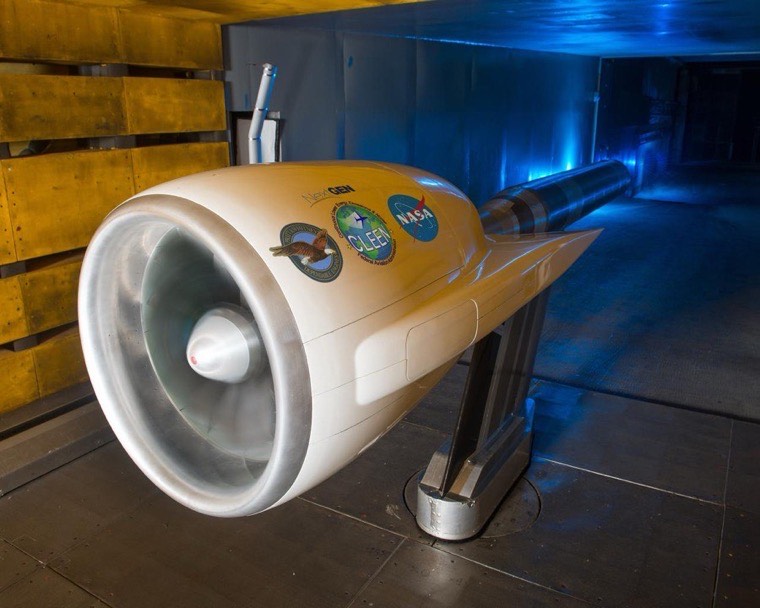
At a glance
- The GP7200 powers the majority of the world's largest A380 fleet. Emirates ordered 123 A380s, 90 of them with the GP7200.
- Emirates is growing its active A380 fleet toward about 110 aircraft by the end of 2026, which extends the support horizon for this engine well beyond what anyone planned.
- Unlike the Trent 900, no in house repair arrangement has been announced for the GP7200.
- The engine combines a GE90 derived core with a Pratt and Whitney low pressure system.
Engine card
| Variants | GP7270, GP7277 |
| Architecture | Two shaft turbofan, GE90 derived core with a Pratt and Whitney low pressure system |
| Thrust | 70,000 to 81,500 lbf |
| Applications | A380-800 |
| Built by | Engine Alliance, the GE Aerospace and Pratt and Whitney joint venture |
| Status | Out of production, in service |
Program and production
The GP7200 exists because Airbus wanted two engine options on the A380 and neither GE nor Pratt and Whitney wanted to fund a new large turbofan alone. The answer was a joint venture that paired a core derived from the GE90, already proven on the 777, with a Pratt and Whitney low pressure system.
Production ended with the A380 line in 2021. What has changed since is the assumption that the installed fleet would wind down steadily.
Emirates is going the other way. It operates around 95 to 96 A380s today and plans roughly 110 active by the end of 2026, restoring stored aircraft as they complete maintenance and cabin upgrades. The reason is the 777X delay, which has left Emirates without the replacement capacity it ordered. The airline has said it intends to fly the A380 into the early 2040s.
For the GP7200 that means a support requirement stretching two decades beyond the end of production.
Technical and maintenance
This is mature engine support, and the central discipline is parts.
In plain terms
When an engine goes out of production, new parts eventually stop being made. Support then depends on three things: parts recovered from torn down engines, approved repair schemes that restore a part rather than replacing it, and shops that retain the tooling and the people. All three get scarcer as a fleet shrinks, which is why a growing fleet is unusually good news for an out of production engine.
On the line
Watch where capability sits. Emirates has announced in house fan case repair for the Trent 900 from 2027 but nothing equivalent for the GP7200, so GP7200 support continues to run through the Engine Alliance network. For smaller A380 operators that is a dependency worth understanding, because capacity decisions on this engine will be shaped by one very large customer's needs.
Life limited part records management matters more than usual on a small fleet of an out of production engine, because a records problem can strand an otherwise serviceable part.
Applications and fleet
The GP7200 is only ever fitted to the A380. Emirates is by far the largest operator, with 90 of its 123 A380s GP7200 powered. Other A380 operators split between this engine and the Rolls-Royce Trent 900.
Emirates pulled the A380 from twelve routes in September 2026 as a network adjustment rather than a fleet reduction, and is retiring its highest density 615 seat aircraft as its retrofit programme progresses.
Safety
No significant developments since 11 October 2026.
No Airworthiness Directive of fleet wide significance was issued against the family in this period.
Sources
- GE Aerospace, "Emirates Selects GP7200 Engines for Additional Airbus A380 Aircraft", 2026. https://www.ge.com/news/press-releases/emirates-selects-gp7200-engines-additional-airbus-a380-aircraft
- FlightGlobal, "Emirates to bring some Trent 900 engine maintenance work in-house", 2026. https://www.flightglobal.com/aerospace/emirates-to-bring-some-trent-900-engine-maintenance-work-in-house/165431.article
- Air Data News, "Emirates to expand active A380 fleet to 110 aircraft by end-2026", 2026. https://www.airdatanews.com/emirates-a380-fleet-expansion-2026/
- AirInsight, "The A380 engine choice", 2026. https://airinsight.com/the-a380-engine-choice/